

Article-at-a-Glance: AI-Powered Decisions in Risk Management
- Understanding AI’s role in modern risk management strategies.
- Exploring the advanced techniques of AI in risk analysis.
- Identifying the best tools and technologies for AI-powered risk management.
- Learning how to implement AI in risk management effectively.
- Real-world applications showing AI’s impact on different industries.
AI and Risk Management: A Modern Alliance
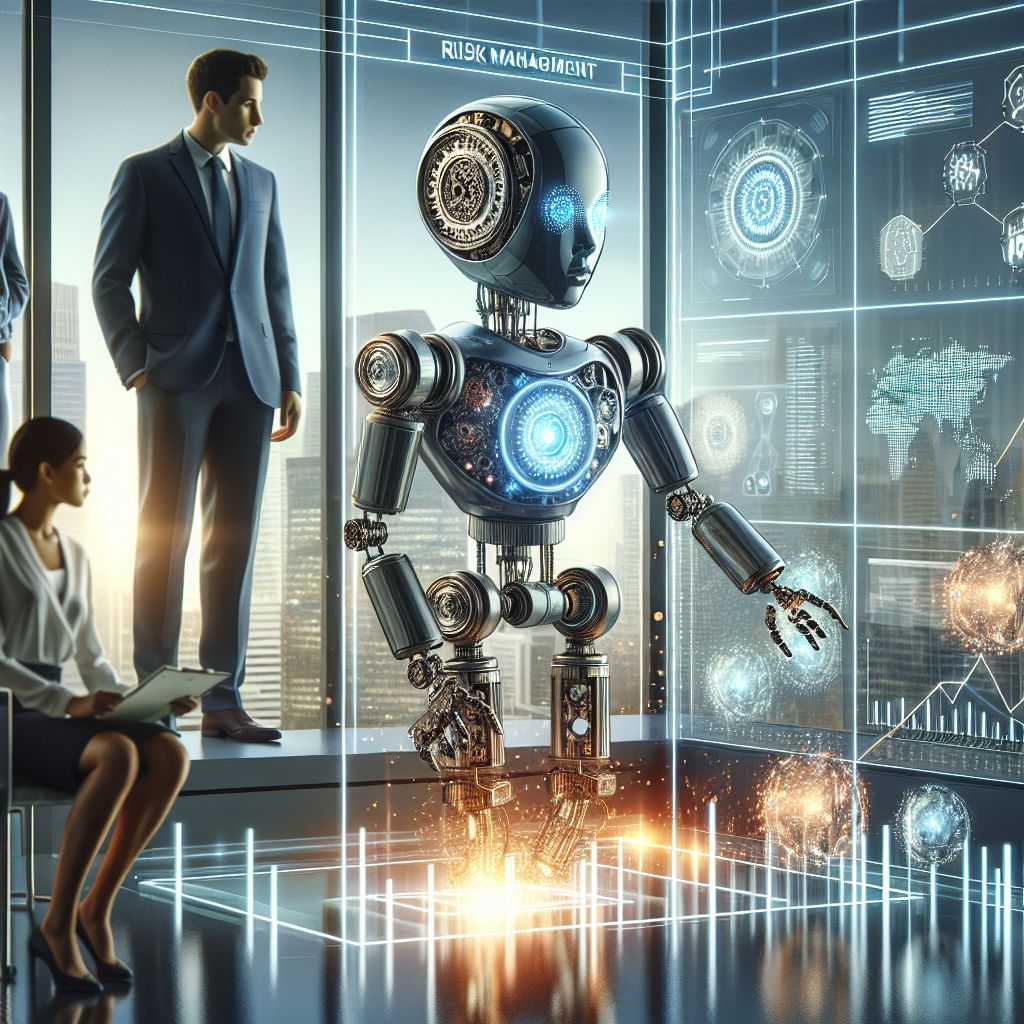
When we talk about risk management, we’re discussing the art of anticipating the unexpected and planning for it. In the past, this meant a lot of guesswork and gut feelings. But now, we’ve got AI on our side, and it’s a game-changer. AI brings to the table an ability to process and analyze data on a scale that’s humanly impossible, making risk management not just smarter but also more proactive.
The Rise of AI in Predicting Risk
Risk prediction is not just about avoiding negative outcomes; it’s about steering towards positive ones. With AI, we can sift through mountains of data to find those tiny, often hidden signals that warn us of potential risks. AI doesn’t get tired, it doesn’t get biased, and most importantly, it gets better over time with more data.
Imagine you’re running a business, and you’re worried about fraud. You can’t possibly monitor every transaction yourself, but AI can. It can learn the patterns of what normal transactions look like and then ping you when something looks off. That’s AI predicting risk, and it’s just the tip of the iceberg.
How AI is Reshaping the Approach to Uncertainty
AI doesn’t just predict; it helps us reshape our entire approach to uncertainty. It turns risk management into a dynamic, ongoing process. Because AI systems are constantly learning and updating, they can help us adapt to new risks as they emerge. This means we’re always a step ahead, rather than scrambling to catch up.
Key Strategies for AI Deployment in Risk Management
Deploying AI in risk management isn’t just about plugging in a new software and watching it go. It requires a thoughtful approach. You’ve got to start with good data because bad data can lead to bad decisions. And you need to integrate AI into your existing processes in a way that makes sense for your business.
Starting with Data Integrity
Here’s the deal: AI is only as good as the data you feed it. If your data is messy, incomplete, or biased, your AI’s predictions will be too. So, before you jump into the deep end with AI, make sure your data is clean, organized, and representative of the risks you’re trying to manage.
- Regularly clean and validate your data to ensure accuracy.
- Ensure diverse data sources to avoid bias in AI predictions.
- Keep your data organized for easy access and analysis.
Let’s say you’re in charge of safety at a manufacturing plant. Your AI can help predict equipment failures before they happen, but only if it has the right data on maintenance history, operating conditions, and previous failures.
Building the AI Risk Management Framework
Once your data is in good shape, you need to build a framework for how AI will fit into your risk management strategy. This means setting clear objectives, choosing the right algorithms, and deciding how AI’s insights will be used in decision-making. It’s like creating a blueprint for a house before you start building.
- Define what risks you want AI to help manage.
- Select AI algorithms that are proven to work with your type of data.
- Decide how AI will inform your risk management decisions.
For example, if you’re a financial advisor, you might use AI to help manage investment risks. You’ll need to decide whether you’re more concerned with short-term volatility or long-term trends, and choose your AI tools accordingly.
Deep Learning and Real-time Risk Processing
For instance, in the high-stakes world of stock trading, AI systems use deep learning to process massive streams of real-time data, helping traders make split-second decisions that can make or break fortunes.
Deep learning is a subset of machine learning where artificial neural networks — reminiscent of human brain structure — work through layers of computation. In risk management, this translates to an enhanced ability to identify complex, nonlinear patterns and relationships within data. This is especially valuable in real-time risk processing, where decisions need to be fast and accurate.
Consider the example of natural disaster prediction. Deep learning models analyze weather patterns, historical data, and real-time sensor inputs to predict events like hurricanes with greater accuracy, giving communities more time to prepare and potentially saving lives and resources.
Moreover, these models continuously learn and improve, which means the more data they process, the better they become at predicting and managing risks. This creates a dynamic system that evolves and adapts to new threats as they emerge.
Toolkits and Technologies Enhancing AI Risk Management
Choosing the right toolkit is crucial for effective AI risk management. These toolkits can range from software libraries for developing custom solutions to comprehensive platforms that offer end-to-end risk management capabilities.
Top AI Software for Risk Professionals
There’s a wealth of AI software out there designed for risk professionals. For instance, platforms like IBM’s Watson offer powerful tools for data analysis and prediction, while companies like Palantir provide platforms specifically tailored to integrating and analyzing large datasets.
When selecting AI software, consider the following:
- Does the software specialize in the type of risk you’re trying to manage?
- How user-friendly is the interface?
- What level of customization does it offer?
- Can it integrate smoothly with your existing systems?
Integrating IoT and AI for Dynamic Risk Solutions
IoT, or the Internet of Things, refers to the interconnected network of devices that communicate with each other. When combined with AI, IoT devices become powerful tools for risk management, providing a stream of real-time data that AI systems can analyze and act upon.
Imagine a fleet of trucks equipped with IoT sensors that monitor vehicle health, cargo conditions, and driver behavior. AI can analyze this data in real time to predict and prevent accidents, theft, and breakdowns, thereby mitigating risk in logistics operations.
Real-world Applications: AI Mitigating Risks Across Industries
AI isn’t just a theoretical tool; it’s already making a tangible impact across various industries. Let’s explore some of the ways AI is being used to mitigate risks in different sectors.
Finance Sector: AI in Fraud Detection and Credit Scoring
In finance, AI is revolutionizing the way institutions approach fraud detection and credit scoring. By analyzing transaction patterns and customer behavior, AI can identify fraudulent activities with a high degree of accuracy. Similarly, AI algorithms can assess credit risk by considering a wide array of factors beyond traditional credit scores, providing a more nuanced view of an applicant’s financial reliability.
Healthcare: Predictive Analytics for Patient Care Risks
Healthcare is another sector where AI is making strides in risk management. Predictive analytics can help healthcare providers identify patients at risk of developing certain conditions, allowing for early intervention. This not only improves patient outcomes but also reduces the financial risk associated with long-term care.
- AI can predict patient admissions, helping hospitals manage bed availability.
- Machine learning models can forecast the spread of infectious diseases.
- AI helps in personalizing treatment plans to reduce the risk of adverse reactions.
In supply chain management, AI is used to optimize inventory levels and logistics, minimizing the risk of overstocking or stockouts. By analyzing sales data, market trends, and supplier performance, AI can help businesses keep just the right amount of inventory on hand — not too much, not too little.
For example, a retail chain might use AI to analyze purchasing patterns and predict which products will be in high demand, ensuring that they are well-stocked without overinvesting in inventory.
Finally, let’s look at the exciting developments we can expect in the future of AI in risk management.
On the Horizon: The Future of AI in Risk Management
The future of AI in risk management is bright, with advancements in technology paving the way for even more sophisticated applications. We’re looking at AI systems that not only predict risks but also recommend actions, automate responses, and learn from outcomes to refine their predictions over time.
As AI becomes more integrated into the fabric of various industries, its role in risk management will only grow. We’ll see AI systems that are tailored to specific industry needs, capable of interpreting complex regulations, and even collaborating with humans to make more nuanced decisions.
In conclusion, AI is transforming the way we manage risk, providing tools and techniques that are faster, smarter, and more adaptable than ever before. By leveraging the power of AI, businesses can not only protect themselves against potential threats but also position themselves to take advantage of new opportunities, driving innovation and growth in an uncertain world.
The future of AI in risk management is not just about technological advancements; it’s about a fundamental shift in how we approach the concept of risk itself. With AI’s predictive capabilities, we’re moving from a reactive stance to a proactive one, where risks are anticipated and mitigated before they can have a significant impact.
Integrating AI into Traditional Risk Management Roles
As AI becomes more prevalent in risk management, it’s important to understand how it integrates with traditional roles. AI doesn’t replace the human element; instead, it enhances it. Risk managers equipped with AI tools can focus on strategy and decision-making, leaving the data crunching to the algorithms. This partnership between human and machine leads to more informed decisions and a more robust risk management strategy.
Frequently Asked Questions
Now, let’s address some common questions about AI in risk management to further clarify its role and benefits.
What is AI Risk Management?
AI risk management involves using artificial intelligence to identify, assess, and prioritize risks. AI algorithms analyze vast amounts of data to detect patterns and predict outcomes, helping organizations to make data-driven decisions and mitigate potential threats more effectively.
How Does AI Identify Potential Risks?
AI identifies potential risks by processing and analyzing data much faster than humans can. It uses machine learning to learn from historical data, recognize patterns, and predict future outcomes. This allows organizations to respond to risks in a timely manner.
Are There Industries Where AI Risk Management is Crucial?
Yes, there are several industries where AI risk management is particularly crucial, including finance, healthcare, and cybersecurity. In these sectors, the cost of risk mismanagement can be extremely high, making the predictive power of AI invaluable.
Can AI Risk Management Replace Human Decision-making?
AI risk management is not about replacing human decision-making but augmenting it. AI provides valuable insights and recommendations, but the final decisions should always consider the context and expertise that only humans can provide.
What Should I Consider When Implementing AI in Risk Management?
When implementing AI in risk management, consider the quality of your data, the alignment of AI with your risk management goals, and the need for transparency and explainability in AI decision-making processes. It’s also crucial to ensure that your team has the necessary skills to work alongside AI tools.
In conclusion, AI is a powerful ally in the world of risk management. It enables us to process information at an unprecedented scale, predict outcomes with greater accuracy, and respond to risks in real-time. As we look ahead, it’s clear that AI will continue to play a vital role in shaping the future of risk management strategies, advanced techniques, and tools. By embracing AI, organizations can not only safeguard against potential threats but also unlock new opportunities for innovation and growth.
