

Main Points: Machine Learning’s Role in Employee Access Control
Machine learning improves employee access control by predicting and granting the necessary access based on each individual’s role and needs.
Automating access decisions increases security and productivity by providing real-time, custom access.
Smart algorithms analyze patterns and behaviors to simplify access management and proactively address security risks.
Machine learning helps achieve a balance between granting too many and too few access rights, reducing inefficiencies.
Advanced machine learning models ensure the protection of sensitive data through multi-layer security measures and compliance with regulations.
Smart Guardrails: Striking the Balance between Security and Productivity
Imagine a world where every employee has exactly the right amount of access to the systems and data they need – no more, no less. This balance is key – too much access and you risk security breaches, too little and you hamper productivity. The goal is to create smart guardrails that protect without getting in the way of work.
Why Minimal Access is Optimal
Minimal Access, or MA, is the principle of giving users the lowest levels of access needed to do their jobs. Why does this matter? It’s easy: safety and productivity. By limiting access to only what is needed, you decrease the chance of internal and external threats. Simultaneously, by making sure employees aren’t weighed down by access restrictions, you allow them to work efficiently.
Adopting Automated Approaches in Access Decisions
Automated processes are crucial in handling access rights. They eliminate the chances of human mistakes and prejudice, thereby making the process quicker and more dependable. By utilizing machine learning, companies can automate the decision-making procedure for giving or withdrawing access, resulting in a safer and more efficient environment.
Let’s take a closer look at how machine learning is transforming the way we control employee access.
Machine Learning Leads the Way
Machine learning, a branch of artificial intelligence that applies algorithms to data to learn from it and make predictions, is leading this revolution. When it comes to access control, machine learning algorithms can predict the access needs of employees based on their roles, behaviors, and patterns within the organization.
How Algorithms Predict Access Needs
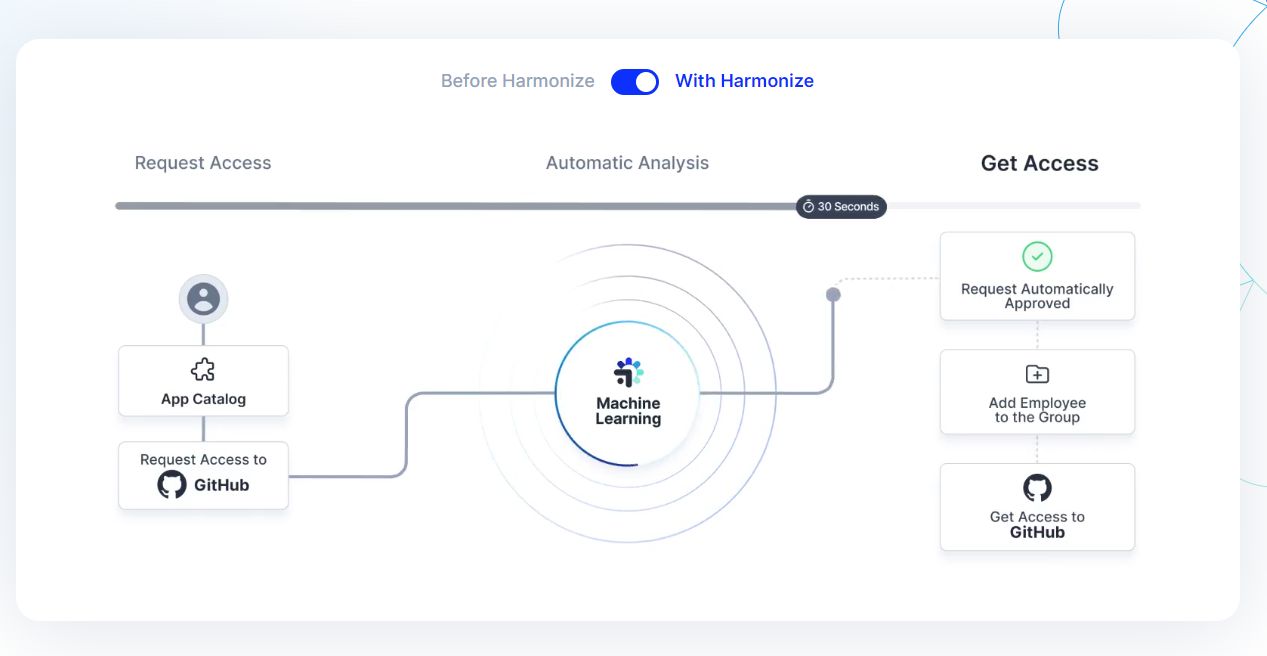
Machine learning algorithms are designed to detect patterns in large datasets. In an organizational context, these algorithms can observe how different roles interact with various systems and applications. By understanding these patterns, the algorithms can predict what access a new employee might need based on their role, or suggest changes to current access levels if an employee’s role changes. For a deeper insight into this, read about ML-powered employee lifecycle management.
How Machine Learning Works in Security
The way machine learning works in security is a multi-step process. First, the algorithm is trained on past data, learning which access rights go with which roles. Then, as it sees more data, it gets better at making predictions, becoming more accurate as time goes on. Finally, it uses these predictions to handle real-time access requests, allowing or disallowing access as necessary.
Instant Modifications for Ever-Changing Workplaces
Ever-changing workplaces need to be adaptable, and machine learning is great at offering this. As employees work on various projects, their access needs can often change. Machine learning platforms can monitor these changes instantly and modify access permissions as needed. This makes sure that employees always have the resources they need without putting security at risk.
For instance, an employee might be put on a project that needs access to a specific database temporarily. The system can give that access for the time the project is ongoing and then take it away when the project is done. This way, access rights that are no longer needed don’t pile up over time.
Looking Ahead to Predictive Access Management
Predictive access management is the future of smart employee access control. Rather than responding to access requests, machine learning enables companies to foresee and address access requirements before they become a problem.
Moving from a Reactive to a Proactive Approach
Switching from a reactive to a proactive approach in access management allows companies to stop security incidents before they happen instead of just dealing with them after the fact. Machine learning models can spot potential risks or requirements by studying user behavior and access trends, warning administrators to step in before any real issues occur.
How Machine Learning Can Help Create Access Protocols That Stand the Test of Time
Machine learning is not just about meeting current access requirements. It also has the ability to adjust to changing security environments. As new threats appear and technologies evolve, machine learning models can be retrained to recognize and manage these new risks. This flexibility is key to creating access protocols that will remain secure in the future and ensure long-term resilience against security threats.
Eliminating the Excess: Simplifying Access Management
Access management can become a nightmare due to the pile-up of permissions over time. Machine learning is a lifesaver in such situations as it offers precise, data-backed insights on which permissions are essential and which can be discarded.
The Expense of Overprovisioning vs. Underprovisioning
There’s a fine line between overprovisioning and underprovisioning access rights. Overprovisioning, or granting employees more access than necessary, can lead to security risks. Underprovisioning, on the other hand, can prevent an employee from working efficiently. Machine learning assists in finding the perfect balance by constantly evaluating and modifying access based on actual usage and requirements.
Making Audits Easier with Smart Analysis
Machine learning also makes the audit process easier. It gives auditors a smart analysis of access rights, which makes it easier to find and fix any issues. This not only makes sure that you’re following all the rules, but it also cuts down on the time and resources spent on manual audits.
Securing Confidential Information: Sophisticated Access Control
Machine learning provides an advanced layer of security for your organization’s most confidential information. It understands the context of access requests and the sensitivity of the data, enforcing stricter controls when necessary.
Protecting Your Most Valuable Assets with Machine Learning
The ‘crown jewels’ of a company—its most critical and sensitive data—require the highest level of protection. Machine learning enhances access controls by identifying which data is most sensitive and who should have access to it, thus securing these assets from unauthorized access or breaches.
A company’s most vital and confidential information, often referred to as its ‘crown jewels,’ requires the utmost protection. Machine learning improves access management by determining which data is most sensitive and who should have access to it, thereby protecting these assets from unauthorized access or breaches.
How Machine Learning Helps With Compliance
Compliance is a big deal for any organization, and machine learning can be a big help in keeping up with it. By making sure access rights are compliant and keeping detailed logs of access events, machine learning tools help organizations stay on the right side of the law and pass audits with ease.
Commonly Asked Questions
In this part, we’ll tackle some of the most frequently asked questions about how machine learning contributes to assessing and controlling employee access risk.
What does Machine Learning mean in terms of Access Risk Assessment?
In terms of access risk assessment, machine learning means using algorithms that can learn from data without the need for explicit programming. These algorithms analyze past access data and behaviors to predict and give the right access levels to employees. They can also spot anomalies that may signal a security risk, allowing for a proactive approach to access management.
What Are the Main Advantages of Using Machine Learning in Employee Access Management?
There are many advantages to using machine learning in employee access management:
Enhanced security through dynamic and predictive access rights management.
Increased productivity by ensuring employees have timely access to necessary resources.
Reduction of administrative overhead with automated access decisions.
Improved compliance with regulatory requirements through consistent and auditable access control processes.
Cost savings by eliminating excess or redundant access rights.
How Does Machine Learning Streamline Access Reviews and Compliance Audits?
Machine learning streamlines access reviews and compliance audits by providing a comprehensive analysis of access rights and usage patterns. It can automatically identify access that should be reviewed or revoked, thereby reducing the manual effort required for audits. Additionally, machine learning can keep a detailed and accurate log of access events, which is invaluable during compliance reviews.
Does Using Machine Learning for Access Control Pose Any Privacy Issues?
Despite the fact that machine learning can significantly improve access control, privacy issues must be addressed. Companies must confirm that their use of machine learning complies with privacy laws and regulations. It’s also important to be open with employees about the data that’s being collected and why it’s being used. Privacy risks can be reduced by implementing appropriate safeguards, such as data anonymization and strict access controls for the machine learning system itself.
How Does My Company Start Using Machine Learning in Our Access Control Systems?
If you want to start using machine learning in your access control systems, here are some steps to consider:
Pinpoint the specific access control issues your company is dealing with.
Gather and structure access-related data for the machine learning model to process.
Select a machine learning solution that matches your security needs and compliance obligations.
Train your team on the new system, focusing on the changes in access control procedures.
Keep an eye on the machine learning system’s performance and make adjustments as needed to ensure it meets your company’s needs.
By following these steps and continuously fine-tuning your machine learning models, your company can stay one step ahead of security threats and simplify your access control protocols.

Leave a Reply